


What Changes and What Doesn’t
November is photo season. Family gatherings, holiday cards, friends you haven’t seen in a year—and a camera angle that makes you notice a lot.
If you’ve been thinking about whitening your teeth but you already have veneers, crowns, bonding, or an implant crown, you’re not alone. This is one of the most common “why does it look uneven?” questions we hear.
Let’s make it simple: whitening works on natural teeth. It does not change the color of restorations. That doesn’t mean whitening is off the table. It just means you need the right plan.
The Quick Answer
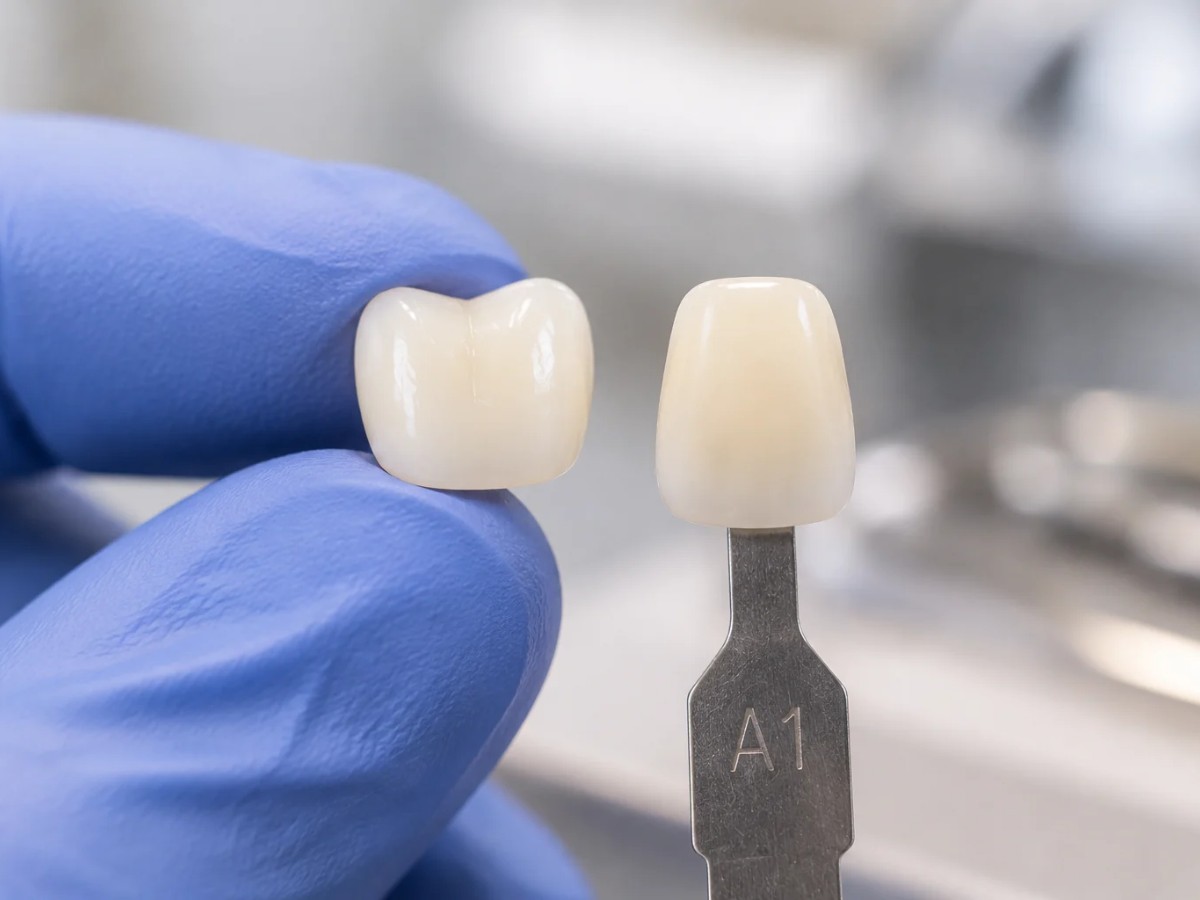
what whitening can and can’t do
Whitening can lighten natural enamel. It does not whiten:
- porcelain veneers
- crowns (including implant crowns)
- tooth-colored bonding or fillings
So if you whiten without a strategy, you can end up with natural teeth that get brighter while restorations stay the same shade. That’s where mismatches happen.

Why one tooth “didn’t change” (common scenarios)
If you’ve ever thought, “My whitening worked everywhere except that one tooth,” here are a few common reasons:
- that tooth has a crown or veneer (it won’t whiten)
- the tooth has internal discoloration that needs evaluation
- there’s bonding on the front surface
- the tooth is dehydrated temporarily (color shifts can look uneven day-to-day)
A quick exam helps identify what’s real vs. what’s optical illusion.
How to get a uniform look (the safe sequencing approach)
If you want your smile to look cohesive, there are a few common strategies:
- Whiten first, then match new restorations (for patients planning veneers/crowns/bonding soon)
- Whiten and evaluate shade differences (for patients with existing restorations who want brighter enamel around them)
Refresh older restorations if needed (when an old crown/veneer shade no longer blends well with today’s smile goals)
The goal isn’t “as white as possible.” The goal is natural harmony—a well-crafted look that fits your face and doesn’t draw attention to dental work.

If you have an implant crown
Implant crowns won’t change shade with whitening, but your natural teeth around them can. If your implant is in the front, shade planning matters even more. We want the implant crown and neighboring teeth to look like they belong together.
If you’ve noticed the implant crown looks “brighter” or “duller” than the rest of your smile in photos, schedule an evaluation. There’s usually a clear explanation—and a path forward.

Sensitivity and timing (especially before events)
Whitening can cause temporary sensitivity for some patients. If you’re prepping for a big event, don’t start whitening the day before. Give yourself time to adjust, and talk to your dentist about how to minimize sensitivity if you’re prone to it.
Also, if your gums are inflamed or bleeding, address that first. Whitening gel and irritated gums are not friends.
Ready for a brighter, more even smile?
If you want whitening that looks natural—and you have veneers, crowns, bonding, or implants—don’t guess. Schedule a consultation at McKinney-Graham Dental Arts. We’ll help you choose a plan that keeps everything looking cohesive and well-crafted.
Request An Appointment Today!
This article is general information only.
You’ll need an in-person evaluation for a recommendation on sedation options.